Digital Methods Workshop, 25/10/2013 (Dullest Title Ever….)

Today I attended a workshop on Digital Methods Development: Researching Social Movements in Online Environments at CRASSH.

I’m going to reproduce my very limited notes here and try and expand on them before it all goes out of my head (in about ten minutes):

  • IC as a movement? Is in discourse.
    • The session was on social movements, with the first speaker discussing her research on uprisings and activist networks – in particular how they use social media to diseminate information about events (Dr Marianne Maeckelbergh)
    • This led me to thinking about whether the Indigo Children can be called a movement.  I do tend to introduce myself as someone doing the social anthroplogy of new religious movements, but I dont often go into how the Indigo Children might be considered an NRM, certainly something I will be picked up on.  But when it comes to the movement part of the descripter the I.C. are certainly describing themselves as a movement but they are no where as organised as the uprisigns Dr Maeckelbergh was describing, although they do align themselves with them ideologically.
  • Mobile tech changes activism. Emphasis on change from activists
    • One thing I have been keen on is not falling into technological determinism when it comes to the Internet and Social Media: I see the online space as yet another space where people can be human, doing human things.  It was interesting therefore to hear Dr M recount the importance her informants placed on social media for changing how they interact and that there is a definite difference.  I still hesitate to get into transhumanism and cyborgism, but this is something to bear in mind.
  • Being there twice, physically and then online to catch up with twitter etc
    • Dr M talked about the practicalities of working with social media and doing ethnography and how she needs to spend time with the groups she is researching but also spend time on Twitter etc finding out what they said about those events. This leads to a note I made further down about worrying about not capturing EVERYTHING.
  • Contextualization
    • Social Media needs contextualising with other textual forms and offline in order to understand what is really going on, not just relying on one textual source.
  • The environment of tweeter, reader, and the limitations and structure of form used are all at work
    • To bear in mind with contextualization
  • What kinds of connections people make or dont make (I.C. only tweets)
    • I have been looking at Tweets that only say “Indigo Children” as I curious about the motivation behind them, and I’ve been messaging the author’s to see if they can explain what they intended (a shout out, a signifier of belonging…?). In a sense, these are one way connections, pure information pushing, which might incite a reciprocal connection, or it might not…
  • Love tech as horizontal and diffuse as they are. Values overlap
    • Dr M was saying that the activists she researches love social media as their core principles overlaps with the design of the media: connecting horizontally (or democratically), open and diffuse networks. Though of course this ignores the fact that the platform is often proprietary technology…
  • Diminishing returns on twitter – too much tweeting
    • She notes how impact can be watered down, so they sometimes run a shared twitter account and votes in the morning about what will be tweeted in order to reduce ‘noise’.  Compare withe vast, unorganised melee of voices in I.C.
  • Questions force them to consciously describe what they are doing.
    • Important to note how ideas and behaviour might not be analysed prior to researcher’s questions… and answer might not be fully formed.
  • The terror of missing something important
    • I have this, all the time!
  • Slippage between contextualization and narrativation (buying into the story we are being told)
    • Hard to divine true story, but best not to assume everything we are reading is the ‘truth’
    • Contextualize one tweet to another to deal with narrativation
  • Heraclites same river twice
    • Using the following Heraclites quote, Dr Ann Alexander explained that the viewer changes and the viewed changes.  Social media formats will change and develop and even static websites change over time.

Image

  • “Everything on the Internet is traceable,  except when you want to find it” Dr Ann Alexander
    • A version of Sod’s Law!
  • Q of ownership and control
    • Something to bear in mind (see proprietary technology) when copying material.
  • Principal of “do no harm”
    • Should underpin research. Even when not seeking consent, or dealing with implied consent, we should seek first to do no harm. Or as my supervisor says, we should try to be good humans in our dealings with research subjects.
  • Issue of magnification in social media – IC not so prevalent offline nb free listing work
    • A small piece of information, gossip or data can go viral on Social Media and be more impactful than a small piece would be in the ‘real world’.   In the case of the I.C. my free listing work at MBS fairs has so far shown a lack of knowledge about the subject.  Its easy to conflate the large number of hits from a google search with a large offline knowledge.  I’m going to do some work with Google Trends to track the relative interest in the I.C. against more established terms like New Age.

I think I’ll leave my notes there and pick up on some of the other themes we discussed in my next post.

Popular or Scholar?

I’ve been thinking a little about writing style lately, as a paper I presented at the BASR conference has been getting some attention and I’m working it into a publishable piece.  My supervisor hasnt read the expanded version yet, but he read the conference paper (as rough as it was) and his position is that it isnt scholarly enough – that its more like an after dinner discussion point (ouch!).

This of course challenges me to rework it into something suitably scholarly, but it may well be that the argument itself is just not scholarly enough.  And my supervisor, knowing that I will be applying for fellowshios and postdocs, is warning me against publishing for publishing’s sake and not getting quality work out there that committees can judge me on. I understand his concern, but there is also something very nice about being ‘popular’.

What I do, the areas I research, almost always make people say ‘Oooh, how interesting’. Last night we had a welcome back returning grads dinner in my college and I spent a fair bit of time explaining to other grads what an Indigo Child is, how many Jedi there actually ARE, and debating the merits and demerits of the Church of Scientology (I did also find out more about nano-bots, the current trends of thought in the study of Classics, and admired rather some lovely artwork, so it wasnt just me rabbiting on!

I also think however, that working on a popular subject is a little like having your religious beliefs inspired by pop-culture.  However serious you are, and how ever seriously you take the subject, the nature of the origins of what you do can trivilise what you are doing to other more serious academics (not including my supervisor in that comment, and he may well be right!).  So maybe I need to x amount more serious and scholarly than the average academic Joe to counter balance that.  But my natural inclination is towards public accessibility and communicating what is going on in these fields in an appealing way.  My presentations often have visual jokes in them, the titles to my papers are often attention grabbing or pun-ish (e.g. my new paper is called, “See Mom it is Real”: The UK Census, Jediism and the Problem of Really ‘Real’ Religion”…). 

I may have a problem…

Image


#Ilovehashtags

In a moment of serendipitous coincidence I had just decided to write something about hashtags and Twitter when my cousin posted this video on Facebook of Jimmy Fallon and Justin Timberlake showing us how dumb we sound when we use hashtags.

To some extent I agree with my good friends J and J, using too many hashtags is perhaps a sign of including one’s self in a peer led trend of hashtagging rather than actually using a hashtag to join in with a conversation.  By which I mean a hashtag that is so unique that you are the only one using it means that you are in a community of one. But the reverse does apply, using a hashtag can be a  means of community affiliation.

Take this example from my own social media use.  And I use social media… a lot.  My favourite hashtag is #PhDchat where other PhDs in numerous fields post their queries, thoughts, links to blogs and statements about how their day has been.  When I talk to non-Twitter users about Twitter the most common reason they give for not using it is that they dont care what Joe Public had for his lunch.  Fine, I say, dont follow Joe Public, follow Joe *insert your interest here* and find out what he’s being doing lately that is relevant to YOUR interests. So when a PhD posts on #PhDchat about having a crappy writing day I know that there are others in the same boat. Or even better when  a PhD posts about how they managed to work their way out of a crappy writing day I have some tips and tricks to try for myself.

Image

And of course, I use social media for research on New Religious Movements online. And its important to note that hashtagging a post with a religion’s name can be a way of affiliating to that community and the conversation around it.

I obviously keep track of anything #indigochildren.  But I also follow #jediism, #scientology, and search for others as and when.  By doing this I have come across several interesting trends I would not have noticed otherwise, one of which is informing a paper and the other will most likely have to take up most of a chapter in my thesis.  By following the worldwide conversation I am getting to hear what people think about these topics.  I am also noticing HOW they use the social media form.  For example, Twitter allows space for 140 characters, but I have noticed a large number of people JUST posting “Indigo Children” (only 14 characters).  Why is this?  Is it a form of shout out, a way of getting attention for the idea that they are exploring?  Is it a way of identifying themselves publically as Indigos? Is it a way of starting a conversation? I am contacting people who have done this to see what they say, and this will be an interesting area of social media use to explore further.

Image

So J and J, yes I enjoyed your video, but there is more to hastagging than just following a trend.  But it was #lol. #sofunny. #andIlikedhowyoumadethehashtagswithyourhands.

In Which the Author Does Some MORE Fieldwork

I attended another Mind Body ‘Soul’ Fair this weekend in Peterborough and did the same freelisting exercise as in my last fieldwork post.  Here are some of my thoughts and initial findings from this work:

1. This event was held in a conference hall on a showground and was a good ten to fifteen minutes taxi ride from the station, unlike the Kings Lynn event where the Corn Exchange was in the centre of town. This was bound to mean that less casual footfall could be expected, but that the people who made their way to this event were much more intentional and interested in the topic than casual shoppers or gawkers.  Talking to the stall holders the previous day, the Saturday, had been quieter, but the day I went, Sunday, did not seem as busy as the one day Fayre in Kings Lynn.

Interestingly the marketing called it a Mind Body Soul Event, and I am more used to seeing Mind Body and Spirit. As Spiritual is one of my terms on my freelisting leaflet I was particularly interested to see what words came out of that section.  One person I spoke to said that they were considering taking Spiritual off of their branding for their therapies.  That’s just one anecdote and hardly indicative of a general change in attitude but something of interest.

Image

2.  Again at this fair there was a mix of stalls, both those selling items and those selling treatments or readings.  There was very little privacy for the latter, and I had to make sure I wasnt interupting a client when I approached the stall holder with my freelisting leaflet.  Only one reader, a tarot reader, had an enclosed curtained off space.  I chose stallholders again as they were relatively stationary and I prefered leaving the leaflet with them to fill out rather than standing over them.  There were about 40 stalls and some of those I recognised from Kings Lynn.  In  total I got 19 returned leaflets, slightly less than at Kings Lynn.  But my method of approach was quite chatty and time consuming so I didnt expect to hand out many.  Doing this also meant that I had a chance to make new contacts and I have two possible interviewees lined up.

3.  Like Kings Lynn the stallholders and visitors were primarily white.  There was one black stallholder selling Egyptian items such as Ankhs, bookmarks, statues and oils, two Indian stallholders jointly representing the Brahma Kumaris and another Asian looking gentleman offering massage and reiki treatments.

4. As for my word results… I got more words in response to the words “Indigo Children” this time round, though again some were not specific to the category and might have been guesses, e.g. Blue, Purple, Heart, Soul.  Several people asked me what they were.  Some answers made it clear that the writer HAD heard of them before: autism, disabled, pioneers, or the very specific “More evolved children coming into incarnation to deal with the new age”.  When it came to the words “New Age”, there were some very negative responses again:  losers, slackers, misfits, hippies, needy, sloppy and fluffy.  The worst being “smells”.  The most popular response was again Hippy/Hippies. The 1960s and travellers popped up again.  It is definitely worth bearing in mind this reaction to the term New Age as I will still probably have to use it in my descriptions of the milieu I am looking at.

Image

Under Parenting, the word Love stormed home with by far the most responses.  But interestingly, again, words around hard work and duty appeared frequently as well as teaching and guiding.

Under Spiritual the word ‘Higher’ appeared in conjunction with other words, as in Higher Good, Higher Consciousness, Higher Power, Higher Self, suggesting a location for the spiritual at least in a metaphorical sense.  My favourite response to Spiritual was “Me ;)”

5. Someone suggested I look at the order in which the words were written down, but I cant guarantee that people followed the numbering I put on my leaflets.  But, assuming that people write left to right, I might collate all the words in the first position as they should be people most immediate responses to the terms. 

This was another very useful exercise even if my sampling is quite small.  I hope to run it another couple of times depending on what fairs I can get to. 

Image


In Which the Author Does Some Fieldwork…

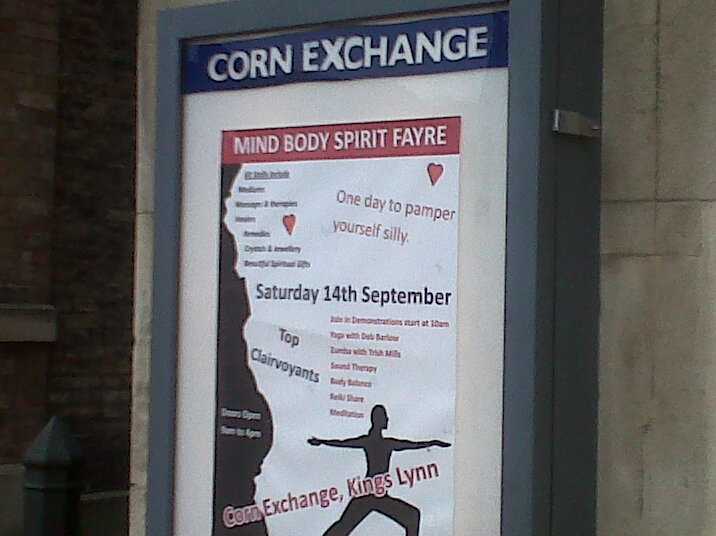
I went to a ‘Mind Body Spirit Fayre’ on Saturday in Kings Lynn, Norfolk. I’m going to use this space to write up some thoughts and issues with this bit of fieldwork.  This is a bit stream of consciousness-y but bear with me!

Image

1. This wasnt an ‘Indigo event’ but a more general holistic/New Age/Spiritual fayre.  There were about fifty stalls (or ‘over sixty’ according to the marketing) including trinket-y ones with small angel statues and artwork, crystal stalls, therapist and psychic reader stalls, and remedy stalls selling products based on herbs and new technologies etc (such as a Neal’s Yard stall, an Aloe Vera stall, a waist-loss wrap system etc etc).

2. The stall holders and attendees varied in background, some seemed more middle to upper class, others had tattoos, multiple piercings etc.  Age range was wide, from small children to retirees, and I’d say that the majority of people I spoke to were women. I only saw two black people, a father and a female toddler.  No other ethnic minorities as far as I saw.

3.  I had to take the Toddler with me (the other half was sick) which presented a few issues.  First, I intended to spend much more time at the fayre than I managed to, working around the Toddler’s lunch, nappy changes etc. Second, the Toddler  needed to be set free from his buggy at one point to burn off excess energy after a nap.  This meant I spent a good half an hour to an hour walking fast in laps of the hall following a speedy little human.  I didnt get much fieldwork/survey work done in this time apart from smiling at the people I had already spoken to and bonding with those who had children too.  There were a few children at the fayre but most were older than the Toddler.  Two little girls were handing out business cards for their mother’s crystal business.  I tried to get the Toddler to hand out my free-listing forms (more on this below) but he ran off with the plastic envelope they were in.  When he was tied down he was a pretty good ice-breaker, even when pretending to be shy!

Image

4.  Free-listing.  I tried a research method I had seen Knut Melvaer and Margrethe Loov talk about during their presentation on fayres in Norway at BASR.  I dont think I did it in quite the same way as I left my forms with people to fill out rather than recording their immediate responses.  I chose four terms and left space for four responses.  These terms were, in this order: New Age, Spiritual, Indigo Children and Parenting.  I made it clear I was a PhD researcher but didnt tell them that Indigo Children are the focus of my thesis until after they had filled in the forms.  I emphasized that they could fill as much or as little as they wanted to/could.  Many admitted that they didnt know what Indigos were and were going to google it, but I had impressed on them that I wanted their immediate responses.

5.  This morning I systematised the responses I received and I am very interested in the particulars of the responses, and the patterns I can see that a full on statistical breakdown (with 23 responses the sample is too small for any major statistical work!).  So for instance, under New Age I can see that the most common responses are (in descending order): ‘Hippy’, ‘Music’, and then in joint position: ‘1960s’, ‘Alternative’, ‘Futuristic’, ‘Modern’ and ‘Traveller’.  Negative words are also very interesting, with New Age receiving ‘Rubbish’, ‘Silly’ and ‘False’, while parenting was dominated by words around ‘hard work’ such as ‘Tough’, ‘Stress’ and ‘Regret’.  The term New Age is not particularly liked by what academics refer to AS the New Age Movement!

Image

6. I received the least responses for ‘Indigo Children’, and many of the responses were more like impressions of the term (‘Blue’, ‘Moon’, ‘Colour’) and suggest that the respondents arent all that familiar with the term.  Certainly many of them said as much when they handed the forms back and I really had to emphasis it wasnt a test with right or wrong answers! This supports (to a small degre given the sample size!) my impression that the Indigo Child phenomena is more widespread online than offline where it is so geographically widespread that it hasnt as yet made a large impression on the New Age Movement.  It was really useful to speak with people from the general holistic milieu to get this perspective: just talking to Indigos could give the impression that its a paradigm shifting idea that is overwhelming held by many.

6.  Some of the responses were hard to read due to spelling errors or handwriting, and I am tempted to speculate on educational background, but I dont have biographical evidence for that.

In all I am pretty pleased with how things went and I am planning to go to another fayre this Saturday/Sunday where I will repeat these research methods… but hopefully leave the toddler at home!

I’d Like to Thank the Academy….

I’m cheating a little bit today and posting the report on the BASR/EASR I wrote for my college funding but I’ve added a few bits here and there, especially in the gratuitous thank you section… but I did genuinely have a lovely time and there are a lot of people who made that possible…

WARNING: You are entering a link heavy zone!

ImageAny excuse for a picture of Link!

BASR/EASR Conference, RELIGION, MIGRATION, MUTATION.

I arrived in Liverpool on Tuesday 3rd September after a four hour journey involving two taxis, two trains and a tube, knowing full well that 1) the journey back would involve yet another train and 2) that the British Association for the Study of Religion (BASR) conference is well worth the effort.

This year the conference was hosting their European sister organisation, the EASR, and the International Association for the History of Religions (IAHR). That alone promised a wide variety of papers and scholars, but having attended the two previous BASR conferences I knew that the conference attracted the very best in British scholars already.

Image

On the Tuesday my main priority was registering and meeting up with a local interviewee for my PhD research on the Indigo Children and the New Age. The first of the papers would be the next day, apart from Maya Berger’s (President – EASR) keynote on the Ramayana’s migrations and mutations, as per the theme of the conference. Linda Woodhead also presented in the evening on the findings from the UK’s Religion and Society Programme.

On the Wednesday I started the day with a panel on Scientology and the Freezone, featuring James R.Lewis of Tromso University. As I am working on a book chapter investigating online conflict using Scientology and its schisms as a case study this was particularly useful. After a tea break, I chose a panel on contemporary Paganism, another research interest, but nine other panels were also available on such disparate subjects as Orthodox Nationalism, Homosexuality, Global Islam, and the Census. In fact, after lunch, I gave the first of my two papers during another panel on the UK Census:   “Blame Sheila: The 2011 UK Census, ‘Other Religion’ and the Rhetoric of Narcissism” which used Jediism as a case study for responses to ‘Other’ religions. As there was also a third panel on the Census, this seems to have been of great interest to religious studies scholars and it will be a shame if the religion question is removed, or the Census abandoned as has been suggested.

That evening we had Graham Harvey’s (President – BASR) key note speech on the mutations that need to take place in our understanding of ‘religion’.    This illuminating speech was followed by the Religious Studies Project’s annual gameshow involving some of the elder statesmen of the BASR, this year based on the TV show, ‘Pointless’. Special mention must be given to the hosts, David Robertson and Chris Cotter for showing up the gaps in knowledge amongst BASR members who answered the questionnaire the game was based on.  I for one completely failed to recognise Dorothy Martin from the small UFO-cult in Festinger’s study, When Prophecy Fails, something I have done quite a bit of work and teaching on… and my supervisor has just published a book on.  Oops!
Image

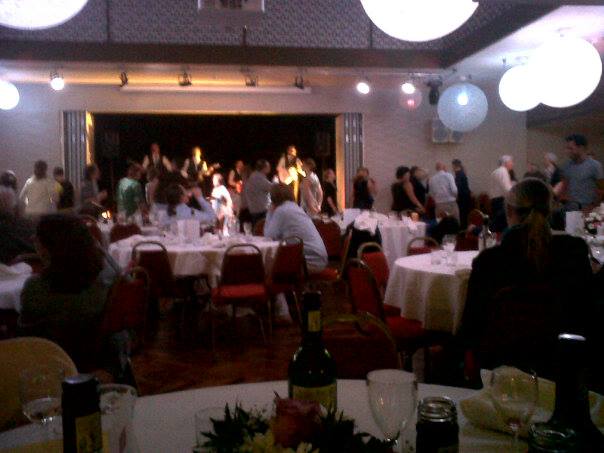
On the Thursday I decided to start my morning with some Heavy Metal , as you do, and went to a panel called “God Listens (to Slayer)”.  Interestingly enough, Drone Metal (discussed by Owen Coggins, OU) was actually quite soporific… After this I went to a panel based around the new book on Non-Religion and Secularity.  This was a very popular panel, with people willing to sit on the floor to attend, which goes to show the level of interest in the developing field of Non-religion and Secularity studies, represented at Cambridge and Kent by Lois Lee.  Amusingly, I asked a question about respondents to a survey who had put Jedi as a satirical answer, and I was pleased to have my own research on the subjects cited back to me!  Kim Knott’s keynote that evening on ‘Religion, Migration and Integration’ introduced a more spatial approach to the study of religion I had not considered as my research is more a-spatial and internet based. And then of course there was the Gala Dinner and some academics dancing to a Beatles tribute band… perhaps the less said about that the better!
Image

On the last day I attended a panel on New Religious Movements and was very interested to hear about the ‘Jesus of Siberia’ who is leading a religious community in the wilderness. And then after more tea came the final panels of the conference.  These included one on Religion and Conspiracy Theories were I presented my second paper, this time on my thesis research: “Big Bad Pharma: New Age Biomedical Conspiracy Narratives and their Expression in the Concept of the Indigo Child”.  Ethan Quillen’s (conjurer of atheist conceptions) use of Donald’s Rumsfeld’s categories of knowledge to define atheism was amusing and illuminating.  Thanks to David Robertson of Edinburgh (Professor of archaeology, expert in the occult and acquirer of rare antiquities…) for organising this panel and asking me to be on it, and to Stef Aupers of Erasmus for chairing.

Thanks also to ‘Tylor Guy’ and ‘Phenomenology Guy’ (Liam Sutherland and J.D.F.Tuckett) for being so entertaining… to Knut Malvaer and Margrethe Loov for inspiring new research methodologies for my own PhD… to David Wilson for responding to my research requests via Twitter…  to Stephen Gregg and his floral shirt for organising the whole shindig… to Eileen Barker of INFORM, Jim Cox, Dawn Llewellyn, Wee Beth, Jaspreet Kaur, Suzanne Owen (The Doctor), Teemu Taira, George Chryssides, Abby Day and many many others for some really interesting conversations over the course of the conference…

Looking forward to next year!

Look at me! Look at me!

Oh I do love me a conference.  Interesting people, papers and the chance to catch up with/meet for the first time my favourite academics.

Next week I am at the BASR/EASR 2013 conference where I’ll be presenting on the 2011 Census and the ‘Other’ category in the religion question, and on bio-medical conspiracy theories and the Indigo Children, (the latter is my PhD topic). 

I’m also going to be horribly forward and talk to some publishers about my work.  I’m still a very far way off from finishing but I really think that my thesis could be the basis of an interesting and accessible book.  To be fair, there probably arent that many PhDs out there who dont think that they should turn their thesis into a book, and hopefully a best selling one at that…

But this plan to ‘network’ intentionally at the conference raises a couple of problems for me.  One, I’ve only networked for work intentionally in the film industry, and the methods there are a little more pushy and aggressive.  So I really dont want to come off like that.  I thought I might make up some one page CVs to hand out… or is that too keen/prepared?

Image

Academia is an interesting world to me, and I’ve tried before to talk to my supervisor who has far more experience of it  about the etiquette and norms I should be observing. I do have some other good mentors who have offered to introduce me to people and give me some tips on talking to publishers – and I’m always happy to receive more tips from any readers here (*hint, hint*).

I suppose the best documents for networking might actually be the papers I am presenting. One is completely finished (bar last minute rereading and panicking) and the other needs some finessing on two sections.  So off I trot…

Image

Yes, this is an actual picture from one of my presentations – in this case a 3rd year Undergraduate paper on understanding contemporary religion… the drawing is all my own work!

Enough is Enough

My lovely childminder is taking the next couple of weeks off and heading to the crazily hot climes of Turkey.  I really dont resent her having this time off.  I’ve looked after my son. I cant imagine looking after him and four toddler clones at the same time, with the same demands, nappy changes and tantrums x 5.

Image

But this does mean my days are about be all about the mum part of being a PhD mum.  And the PhD? Well, I’m going to try and work in the evenings.  No seriously, dont laugh.

Anyone who knows me knows that my evenings since Henry was born have mostly involved sitting down with an exhausted sigh and falling asleep in front of the Mentalist or Game of Thrones.  I’ve tried working in the evenings, I really have.  For one week before a conference when Henry was 7 months old I was writing in half hour blocks between cries as he REALLY slowly learnt how to stay asleep.  (By the way, why are human babies the only creatures who need to learn how to go, and stay, to sleep!?!).

I will have to start drinking red bull again, just like I did during exam term as an undergraduate. 

But the biggest problem I have (apart from trying to stay awake) is all the paragons of work ethic I have as examples to beat myself up with.  First there’s my mother. Three kids, on her own, part time job, then a full time one, and a clean and tidy house.  My mother in law, two kids and a husband, factory job working 18 hours a day, exceptionally clean and tidy house (not sure if I entirely believe this one, or the denials from my husband that she had family help. 18 hours! Really?!?!). My aunt and uncle, two masters/one PhD, two children WHILE renovating a house. When my single/no kids cousin complains about working for an MBA he gets reminded of this.  When I cant work out when I can possibly do a PhD, look after Henry around his childcare, AND be the kind of mother who makes fresh organic meals in an immaculate kitchen while wearing full make up and lovely hair.  I have examples to measure myself up against and find myself wanting.

Image

I read this article recently, which resonated for me:

‘We live in a culture with a strong sense of scarcity. “We wake up in the morning and we say, ‘I didn’t get enough sleep.’ And we hit the pillow saying, ‘I didn’t get enough done.'” We’re never thin enough, extraordinary enough or good enough – until we decide that we are. “For me,” says Brown, “the opposite of scarcity is not abundance. It’s enough. I’m enough. My kids are enough.”

The Imposter Syndrome that seems endemic amongst PhDs is really a part of a wider feeling of Not Good Enough that society has been sucked into.  People have argued that social media compounds this problem.  We’re never doing as much as our online friends, we are never having as good experiences, our hobbies arent as alternative or quirky, our social life as active.  Maybe, but I’ve also found a lot of honesty online as mothers (mostly its the mothers) admit that its not EASY, they do struggle to be everything to everyone.  I particularly like this blog by a friend of mine taking on motherhood and its issues from a religious angle.

I just want to keep on top of everything.  Which might mean a few less naps on the couch in the evening and a bit more of the old tappity-tap on the laptop! Though this seems more likely:

Image


Yesterday Was a Good Day…

I spent a good few years working in the film industry as a screenwriter and script editor with only a mere modicum of success. Occasionally I would get a good commission only to be disappointed by the unprofessionalism of the person hiring me (a moan for another day…).  But it would be all too easy to blame them for me never reaching the stellar heights of the industry.  Instead I try to bear in mind the phrase I often heard at networking events: “You’re only as good as your last script”, and maybe mine werent as amazing as I hoped.

Image

In academic writing I think that phrase holds true to a certain degree, in terms of publications at least.  But in terms of day to day writing I find that having a good day yesterday and producing something workable if not refined can actually be a hinderence to getting started the following day.  There’s an element of laurels resting, but also academic writing can be so draining that getting going again, for me at least, can be hard.

Yesterday was a good day.  I finished off a rough draft of one of my conference papers.  It still needs a lot of work, as I was mostly freewriting it and forcing myself not to edit as I went.  But its there, on ‘paper’, so to speak.  And today I need to tackle the second conference paper almost from scratch.  I have some rather random slides, but the structure’s not working, my argument’s not clear, and I have to start walking up that mountain AGAIN after just ‘finishing’ one paper.

So, I dont actually feel like I am AS good as my last piece of work.  My ‘goodness’ comes from determinadly taking those Sisyphean steps back up the writing mountain.  Here we go then…

Image

Roughing it

One thing I am forcing myself to do lately is to write things almost freestyle without much consideration of sentence structure, grammar or spelling (some people might say that I have always written like that…).  I’m trying to get into the habit of getting it written rather than getting it RIGHT.  I’m the kind of person who will go over and over the same introductory paragraphs till they gleam (or are really boring…) and still not have a middle or an end.  But my i’s will be dotted, my t’s will be crossed…

Image

I’m about half way through the rough first draft of a paper on New Age Bio Medical Conspiracy theories for a religious studies conference in September.  I KNOW that there are parts that dont make any sense yet, I KNOW that I’ve still got some things in bullet points that need expanding, but today I want to get to the end of that first draft and finesse it all later.  Likewise with the Powerpoint presentation for the paper, I KNOW that I havent got quite the perfect picture for slide 6 yet, or the right font size and layout all the way through. But I need to charge on to the end to get it done, then get it GOOD.

Likewise for this blog post.  Usually I will stop after a paragraph and mooch around the internet to look for an  amusing picture to stick in to show of my wit and intelligence (yes, I am one of those people…).  This time I am just barrelling through with very little editing and I’ll stick some pictures in once I am done. Like this cute kitten:

Image

Changing my work style is necessary I think.  In part I think this is a more productive way to work, I have 80,000 words to get written for my thesis.  They cant possible be all individually handcrafted little gems, even if I hope the overall argument will be! I do feel a little like I have hit the mid-PhD slump Patrick Longston writes about here, and his tips are very useful.  But freewriting about the problems you are having was one of the techniques I was shown at the Writing Summer School I mentioned before, and I do think its extremely useful to get you into the writing action when you get jammed up by procrastination and anxiety.

So today…. I’m going to finish that rough draft of the conference paper, even if I write it in a very  slapdash way for now. A key phrase from the Summer school: “Give yourself permission to write badly”.  What a relief THAT is….

Image