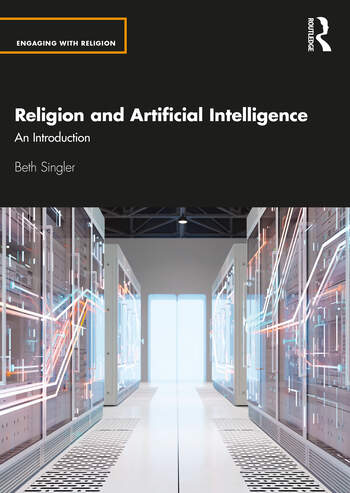
“Beth Singler has crafted a comprehensive yet highly readable survey of religion and AI that includes a wide range of religious traditions and thoughtful discussion cues to get the most reluctant student talking. As either a textbook or as an introduction to the entanglement of religion and AI for the curious reader, this book offers a wide variety of ‘case studies’ to raise questions and challenge our ideas about religion and technology that the reader will find compelling. Singler takes the time to explain and problematize certain terms early on and is rigorous in her scholarship yet manages a narrative-like quality that is very gratifying. This book is an important contribution to the rapidly growing discourse on artificial intelligence.” – Juli L. Gittinger, Georgia College & State University, USA
“It was the machines, Sarah…a new order of intelligence. Decided our fate in a microsecond: extermination.” So says Kyle Reese, time travelling freedom fighter in The Terminator.
Released in the perfectly fitting year of 1984, The Terminator was a low budget, relentless slice of science fiction noir, drawing on years of pulp science fiction to conjure a future nightmare of humanity hunted to near extinction by the machines it created. In 2029, just 5 years away now, Arnold Schwarzenegger’s unstoppable cyborg killer is sent back to 1984 to kill Sarah Connor, the yet-to-be mother of humanity’s saviour-to-come. Fate, redemption & the destructive power of A.I. all made in the analogue age but still influencing the way many imagine our new age of Artificial Intelligence.
Professor Beth Singler re-visits the making of the film with producer Gale Anne Hurd and explores its lasting influence. Forty years on, and the circular self-contained time travel plot of The Terminator has been cracked wide open, letting out alternative timelines and delayed apocalypses: more films, a television show, graphic novels, comics, video games, theme park rides and even memes have spread versions of the original robopocalypse. More than that, the first Terminator has given us a vocabulary and a vision for the dangers of Artificial Intelligence.
With the voices of Gale Anne Hurd, vfx guru Paul Franklin, Sean French- author of the BFI classic, AI researcher & writer Eliezer Yudkowsky & UCL’s professor of science & technology, Jack Stilgoe.
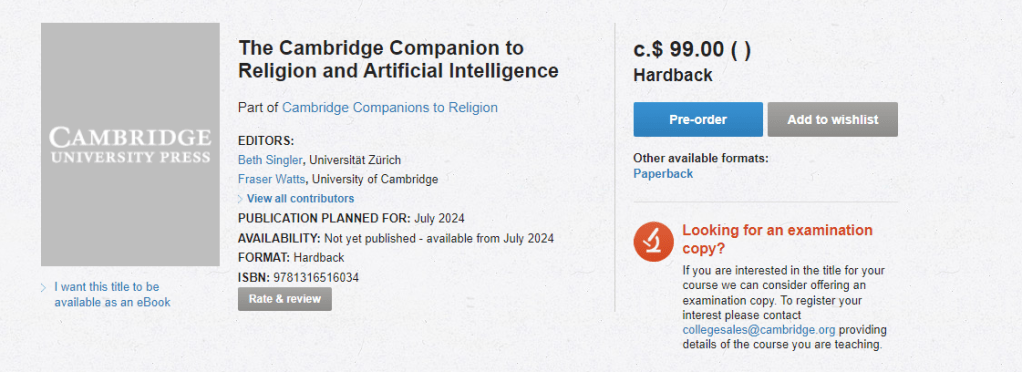
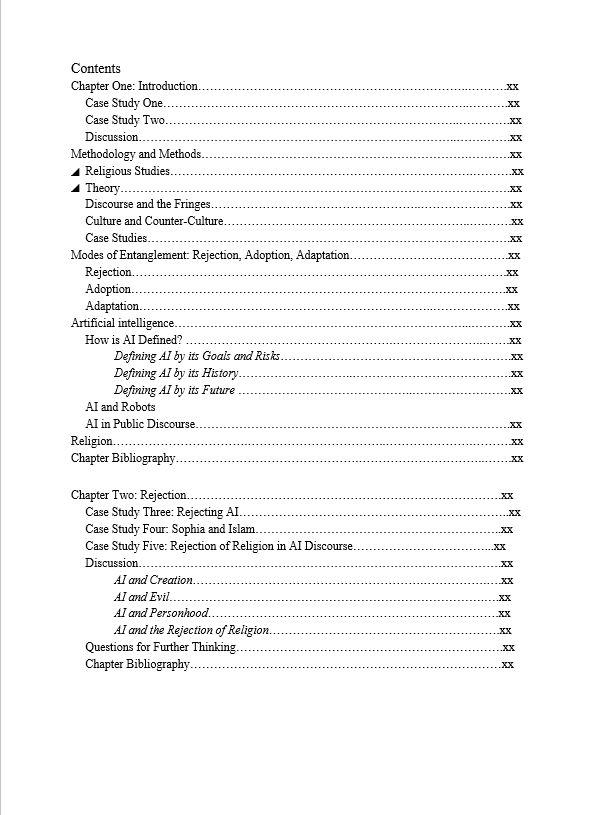
“Religion and artificial intelligence are now deeply enmeshed in humanity’s collective imagination, narratives, institutions, and aspirations. Their growing entanglement also runs counter to several dominant narratives that engage with long-standing historical discussions regarding the relationship between the ‘sacred” and the ‘secular’ – technology and science. This Cambridge Companion explores the fields of Religion and AI comprehensively and provides an authoritative guide to their symbiotic relationship. It examines established topics, such as transhumanism, together with new and emerging fields, notably, computer simulations of religion. Specific chapters are devoted to Judaism, Christianity, Islam, Hinduism, and Buddhism, while others demonstrate that entanglements between religion and AI are not always encapsulated through such a paradigm. Collectively, the volume addresses issues that AI raises for religions, and contributions that AI has made to religious studies, especially the conceptual and philosophical issues inherent in the concept of an intelligent machine, and social-cultural work on attitudes to AI and its impact on contemporary life. The diverse perspectives in this Companion demonstrate how all religions are now interacting with artificial intelligence.”
Okay, a little kind of super SUPER excited. The publication of a special issue dedicated to MY research:
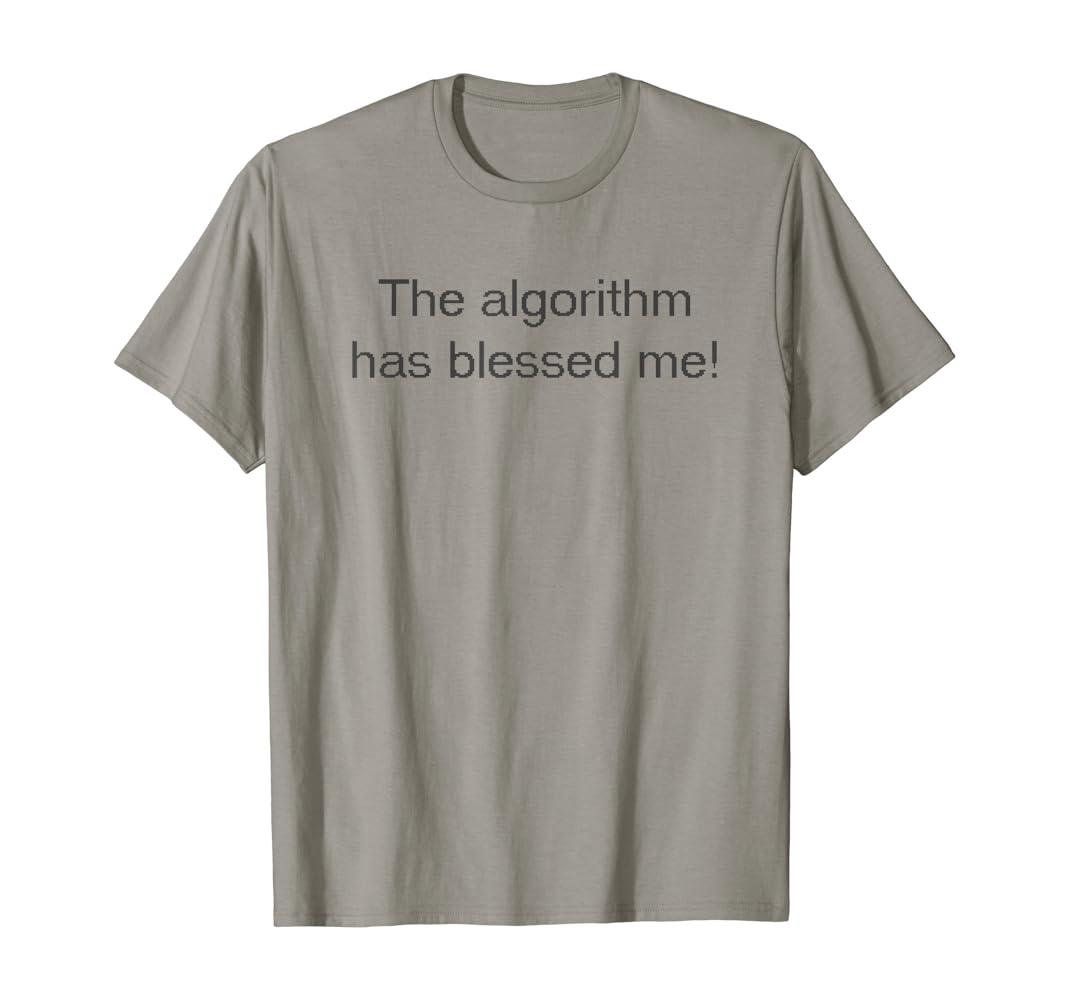
“In times marked by the digital revolution and the development of machine learning, there is nothing more relevant than discussing the impact of Artificial Intelligence on religion: are algorithms the gods of today? The article, “Blessed by the Algorithm: Theistic Conceptions” by British anthropologist Beth Singler, Professor in Digital Religions at the University of Zurich in Switzerland, investigates religious perceptions of Artificial Intelligence by exploring the expression “blessed by the algorithm” in digital discourses and posts. The article not only maps the ways in which individuals believe they are “blessed by the algorithm”, but also questions the grand narratives linking secularization and disenchantment with technological progress. This text, one of the first published exploring the relationship between religion and artificial intelligence, prompted comments from foreign and Brazilian colleagues. Contributors to this debate included Carly Machado (Federal Rural University of Rio de Janeiro), Giulia Evolvi (Erasmus University Rotterdam in the Netherlands), Jacob Boss (Indiana University in the United States), Marta Kołodziejska (University of Warsaw in Poland).”