Please take a look at this call and think about submitting something! 🙂
Abstract deadline: 31st December 2023
Editors’ Emails: beth.singler@uzh.ch and sharday.mosurinjohn@queensu.ca
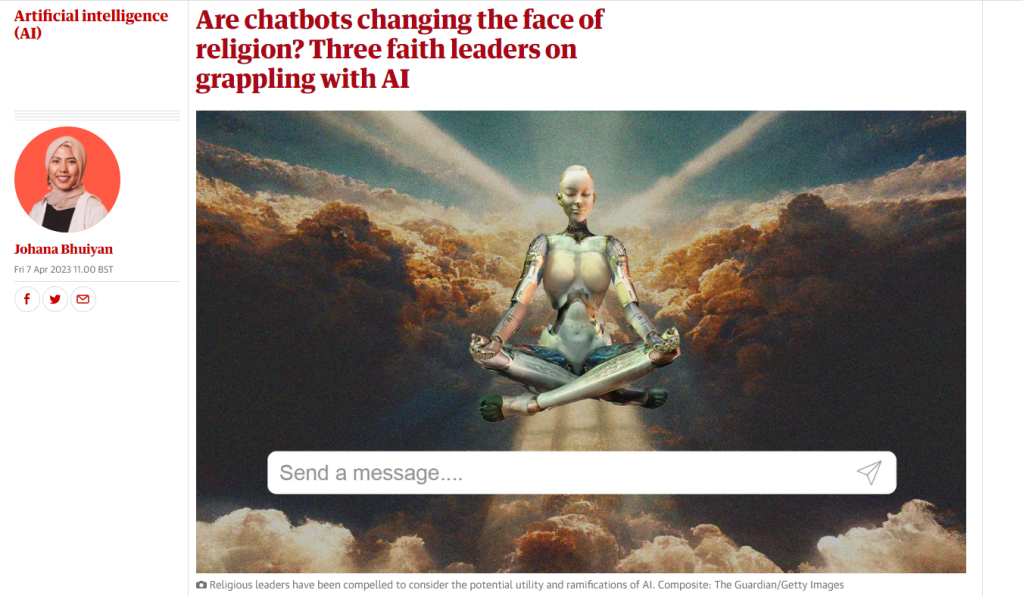
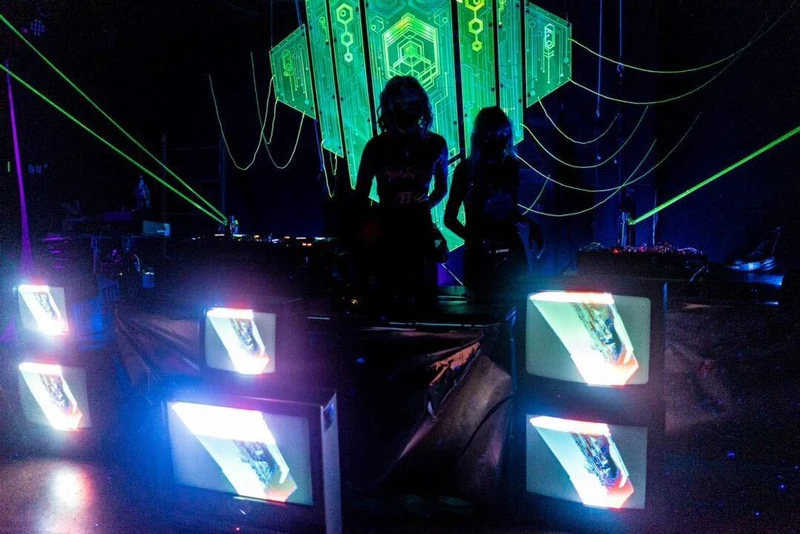
In this edited volume, we will explore the intersection of religion and emerging technology. Our contributors – scholars of religion, theology, sociology, anthropology, history, STS, and science fiction studies, and others – will theorize the way people use emerging technologies in their spiritual, religious, and embodied practices. They will also consider how emerging technologies themselves express and frame new ways of seeing and being in the world: how are such technologies fostering new life worlds, eschatologies, and cosmologies? What meaning making is happening in the employment of such tools, and how are such tools drawn into existing maps of meaning and wonder?
Further, in this volume our contributors will investigate the ways in which technology can challenge or contribute to human flourishing, and the discovery of significance, while simultaneously grappling with the constraints imposed by economic, political, and legal structures that shape technological environments and affordances.
We invite scholars contribute who are keen to delve into the intricate interplay between rebellion and reinforcement within the realm of emerging technologies and religion: how individuals employ these technologies to challenge societal norms, power structures, and cultural constraints will demonstrate how technology is harnessed as a tool of resistance or as a means of affirming prevailing ideologies.
We seek 20 to 25 chapters that will – through a diverse range of case studies, theoretical explorations, and empirical investigations – contribute to the expanding field of scholarship that recognizes the transformative impact of technology on religious practices, beliefs, and experiences – and vice versa. This volume will enrich both academic and public understandings of the complexities that are present when individuals and communities use emerging technologies in their religious beliefs and embodied practices.
Chapter length: 10,000 words including references
We are looking for chapters that will fit into one or more of these chapter types:
- Chapters on specific emerging technologies and their religious affordances and privations.
- Chapters on themes and influences on the relationship between religion and emerging technologies.
- Chapters on the responses of specific established religions, new religious movements, and formations of religion that fall under typologies from the study of religion such as ‘invented’, ‘implicit’, ‘vernacular’, ‘banal’, ‘everyday’, ‘lived’, or come under descriptions of a ‘new visibility of religion’ in contemporary society, sometimes in opposition to secularisation theories.
Possible chapter topics include:
1. Specific emerging technologies and their religious affordances and privations, including:
- Virtual Reality/Augmented Reality
- Metaverses
- Existing and new psychedelics
- Blockchain
- NFTs
- Cryptocurrency
- Mind uploading
- User interfaces including mind computer interfaces
- Game Worlds, including:
- Single player games
- MMORPGs
- Collaborative Game Worlds and pseudo-Metaverses, such as Minecraft, Roblox, etc.
- Augmented Reality Games
- ‘Spirit Tech’
- ‘AI’, approached with a broad definition, including and not limited to specific applications and debates, such as:
- AI assistants such as Alexa, Siri, etc.
- Robot ‘priests’ and other uses of embodied AI in religious and spiritual automation
- Hate speech detection systems
- Automated decision-making systems
- Recommendation systems
- Religious debates on sentience, consciousness, rights, or on the personhood of AI and robots
- AI in science fiction and its impact on religious ideas
- Generative AI, including generative adversarial Networks, AI art, and Large Language Models/Foundational Models, e.g., existing and forthcoming versions of ChatGPT
- Vaporware and technology-based scams, and startups
- Pleasure technologies, e.g., teledildonics, virtual companions, romancing NPCs (both AI enabled and not)
- Ascetical technologies, e.g., methods of self-perfection and self-improvement, dietary and exercise gamification technologies, moral and spiritual enhancement application
- Other emerging technologies not included in this list are also possible subjects
2. Chapters on Themes and Influences:
- Simulating Religion
- Digital Religion as a field
- Religion as a technology
- Corporate issues
- Transhumanism: in all its forms, pertaining to many emerging technologies
- Historical Parallels with prior emerging and disruptive technologies
- Conflict, tension, and disagreement
- Emerging technologies in Science Fiction
- Digital memorials and worship sites
- Digital and physical immortality through technologies
- Speculative Religious Studies
- Emerging Technologies of the Self
3. Chapters on Specific Religious Responses
- Responses from established mainstream majority faiths
- Emerging new religious movements and their engagement with contemporary technology
- Formations and ideas that might be considered under the following typologies of religion: ‘invented’, ‘implicit’, ‘vernacular’, ‘banal’, ‘everyday’, ‘lived’, or come under descriptions of a ‘new visibility of religion’ in contemporary society, sometimes in opposition to secularisation theories.