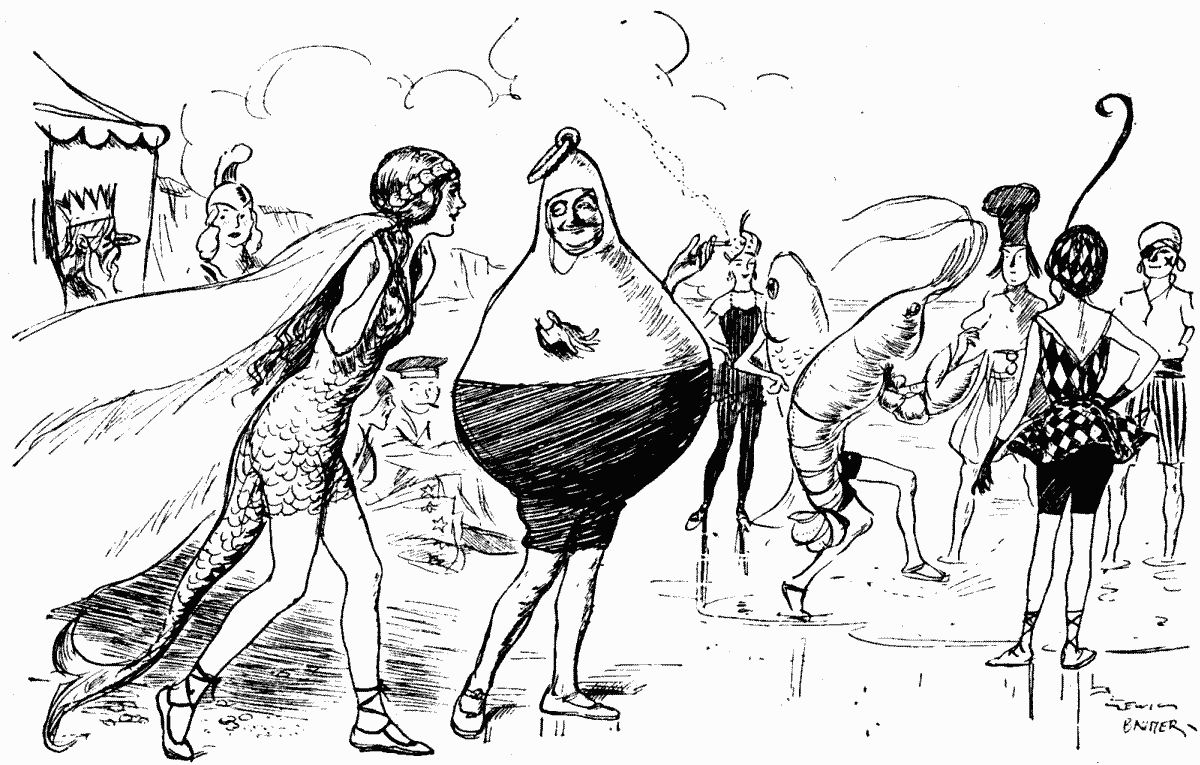
The Game of Turtles

WARNING: CONTAINS ASOIAF/GOT SPOILERS!

This post is a response to Ethan Quillen’s post (here) about the changes being made in the adaptation of the book series A Song of Ice and Fire (henceforth, ASOIAF) as it is made into the TV series, Game of Thrones (GOT) by its producers, David Benioff and D. B. Weiss (known as D&D… as much as I dislike the connection between these two chaps and my favourite tabletop RPG this is the common signifier for them in the online fandoms for ASOIAF and GOT).

I have written on this blog before about ASOIAF with regards to the internal theology and cosmology of the series and how G.R.R. Martin (GRRM) seems to have an evolutionary view of the development of religion on ‘Planetos’ (here).  This post moves beyond religious studies per se to consider the nature of adaptation as Quillen has linked the adaptation of fiction to the work of the ethnographer, and my new religious studies research is primarily ethnographic in nature.

A quick biographical aside, and this is not an attempt to blow my own horn, I must also point out that I have a degree from the National Film and Television School in the UK in Script Development, which involves working with screenwriters, producers and directors on their ideas and scripts, as well as guiding the development of adaptations from original works such as books. As a screenwriter I have also worked on adaptations. So I also have a grounding in the theory and practice of adaptation.

However, before I address Quillen’s post I want to tell you a story… its a story that’s been told before. In fact this story has existed in several forms already.  First, it was the experience of the person who first recounted it.  It was then the story that he shared with a journalist, who then reported in in some form of media.  I then read the story, and now I recount it again in my own words.  Therefore, its a story that’s been through several stages of adaptation… and my decision to present it here should indicate that I at least partially agree with Quillen’s discussion of adaptation.  I do not deny that adaptation occurs in the retelling of experience or fantasy, but I have another point to make subsequently.  However, if you are sitting comfortably, I will begin…

Once upon a time there was a young boy called George. George was a very clever boy, a very imaginative boy, a boy with a big heart.  George was a boy who loved turtles.

He loved turtles so much that he kept a few in a big clean terranium, with a lovely stone castle for them all to live in.  Sadly, as clever as George was he couldn’t always keep his beloved pets alive.  Some mornings he’d get up from his bed, dash over to say good morning to his green skinned friends… and find that yet another of them was on their back at the bottom of the tank.  While the others were still happily breaking their fast in the great hall of the castle, innocent smiles on their beaks, another of their number had gone to a better place.  But George grew suspicious of their happy smiles… he began to write a story about how the turtles were in a contest for the castle, and that the losers were being killed off in sinister plots in a dramatic war of succession.

Years later young George R. R, Martin would write a fantasy series called A Song of Ice and Fire… the turtles havent made an appearance in this yet (although he does wear a turtle brooch on his famous fisherman’s hat).  The fantasy in George’s mind became the story of the Game of Turtles, which was in time adapted into the Game of Thrones (ASOIAF), an example that supports Quillen’s post.

turtle

However… there is a reason why the Game of Turtles is different to ASOIAF.  GRRM could have stuck with the turtles and written a quaint, if a little blood thirsty, children’s book about a fantasy world populated by turtle knights and lords.  But GRRM wanted to write a fantasy series in the mould of Tolkien and the other greats, one that was publishable and likely to be read widely, even if it was also one that played with some of the fantasy/medieval tropes that had become ingrained in popular culture.  Adaptation is not a neutral project… GRRM took his initial ideas about scheming turtles and they evolved and developed as he became a professional writer.  And being professional means operating within a paradigm (in this case, fantasy literature) even if you try to tease a little at the expectations of that paradigm.

Returning to ethnography we can see a similar working within the boundaries that GRRM’s adaptation demonstrates.  Quillen quoted Geertz to support his #everythingisfiction/#everythingisadaptation thesis, so I think it is only fair if I bring in some Rabinow… with regards to his early works, Rabinow explains that he sort refuge in the mode of professionalism expected of the ethnographer: “I guarded myself with the devices offered by my science and with a certain forced naiveté” (Rabinow, 1977:44)

Likewise, Edith Turner explains that her husband’s work on liminality was initially dismissed in Academia in favour of Durkheimian theory because the latter looked like “Good, clean, anthropology” (E.Turner, 2006: 39).  Victor Turner eventually found a space for his discussion of liminality, but this came years after he had resigned himself to being “steadily mainstream”… “because of our three children and the matter of jobs”, Edith says (E.Turner, 2006: 37).  The ethnographer’s adaptation is as prone to commercial expectations as the fantasy author’s is.

And GOT…? Quillen is correct in describing me as an insane fan of the books.  It is an obsession, I’ll admit that.  But as mentioned, I have also been a professional writer of adaptations, so I know about working within the paradigm in order to produce commercially viable products off the back of original works (yes, yes, ‘original’ is a misnomer if EVERYTHING is an adaptation).  But my problems with the GOT adaptation are because they are working on the basis of an older paradigm where the audience is assumed to be… well… stupid.

Quillen also linked to this blog post in his post: http://gotgifsandmusings.tumblr.com/post/115991793402/unabashed-book-snobbery-gots-10-worst. But I’m not clear on whether read it, because this post is less about stamping feet in a tantrum about what has been left out than what themes have been corrupted by D&D’s need for muddled monologuing (that is meant to serve to signal who the audience should think is the bad guy is in a particular scene, a la the James Bond films perhaps) and the whitewashing of D&D’s favourite characters. Such as…

cersei gif

I just (insanely, perhaps) think that the audiences could have coped with a more nuanced show with complicated characters.

Likewise, if you’ve ever come across the Honest Trailer for GOT you’ll have seen a summary of the number of “BEEWBS” in the show.  I’m not a prude… some of them are quite nice if you like that sort of thing.  But the paradigm that D&D are working with allows far less space for women in particular to be the intriguing characters that GRRM intended.  GRRM, the author who complains about the lack of strong women in Tolkien.  GRRM who used the Beauty and the Beast trope in ASOIAF but reversed the genders (Jaime and Brienne). GRRM who created a fantasy loving ‘fair maid’ character and then had her obsess over a man with PTSD and a drinking problem who spits on knights, while being the best of them.  But back to GOT: the following is a list of changes made by D&D that directly diminish the role, complexity and importance of female characters in the show (THIS IS VERY SPOILER HEAVY!! YOU HAVE BEEN WARNED) (taken from http://shakspeare.tumblr.com/post/100824969643/whilst-everyones-getting-pumped-for-season-5-i )

“whilst everyone’s getting pumped for season 5, I think we need to remember a couple of things

  • don’t forget lady stoneheart. don’t forget that the show runners actively decided to cut one of the most powerful character arcs of the book and force her, instead, into the nagging mother stereotype
  • don’t forget arianne martell. don’t forget that it looks like the show runners actively decided to cut a powerful, feminine, kick ass woman of colour, who was next in the line of succession
  • don’t forget that her storyline was all about liberating myrcella and crowning her under dornish law, where women have the same inheritance rights as men, and aren’t passed over in favour of their younger male siblings. don’t forget that her entire storyline focused on females empowering other females.
  • don’t forget that it looks like they’re giving that same storyline to her younger male sibling, who they have gone out of their way to age up so he fits the role, and the story will now probably be “dashing young prince-to-be kidnaps damsel in distress”
  • don’t forget the jamie/cersei rape scene. don’t forget that the show runners actively made the decision to change the story and make that scene include rape.
  • don’t forget that mance rayder had a wife called dalla, and that she had a sister called val and that they were both important leading characters in jon’s story. don’t forget that the show runners actively made the decision to cut them out.
  • don’t forget the totally unnecessary changes to bran’s storyline. don’t forget the fact that rape and abuse just became part of the background set for most of those scenes. don’t forget that the show runners were on set, actively deciding that those scenes needed a little more male on female violence in the background.
  • don’t forget that natalia tena wanted osha to have a pubic wig because when the fuck would a wildling women shave her vagina and the show runners actively told her that wasn’t allowed.
  • don’t forget that they created a female character just to serve as a frequently nude prostitute, and that when the actress, esme bianco, refused to do any more nude scenes, the show runners fired her
  • don’t forget that she was then killed off in the most sexually violent, brutal, and demeaning way possible
  • don’t forget chataya and alayaya, a mother and daughter who were strong, sexual, and unashamedly so, and ran their own brothel. don’t forget that the show runners cut them out, too. don’t forget that the show runners have no problem with sex and prostitution so long as it’s on a man’s terms, and as soon as women are making the decisions, they don’t like it.
  • don’t forget that this show we love and watch and support perpetually goes out of its way to instigate violence against women, to take away their agency, their character, their rights, and their abilities. don’t forget that the show runners consciously make the decisions to demean women and use them as a way to dress the set. don’t forget that they take stories from women and give them to the men. don’t forget that they do not support and respect women the way we support and respect their show.”

TL:DR version: women are deleted/forgotten/raped/simplified.

And this also happens to male characters.  Just one example: Loras Tyrell is one of the best warriors in the Seven Kingdoms in ASOIAF.  But you might have forgotten that since he spends all his free time shagging a prostitute character who wasn’t even in the books, getting down to it very, very soon after the love of his life dies… the one who he is still mourning in the books.
candle

Remember him saying this line about Renly after he died in the show? No? Oh that’s because Loras was too busy showing Olyvar his Dorne shaped birthmark in bed… which might just be one of the laziest last minute plotting devices I’ve ever seen thrown into a TV show!

Or maybe he was too busy talking about fashion.  Because he’s gay,  Did you get that audience? HE’S GAY!!! (thanks D&D, we couldn’t have known that because he was in love with a man, we had to hear about his love of fringed sleeves). Again, D&D are adapting the series on the assumption that the audience is far more stupid than it actually is.

To summarise, I think GRRM’s decision not to write The Game of Turtles series of books was the correct one, it was just a far stronger story with humans in the key roles, and more commercially viable.  However, the assumptions driving D&D’s adaptation are driven by their conception of what we want to see: that beewbs sell, but complex characters don’t.

Quillen’s overall point that everything is an adaptation is not necessarily incorrect.  It is merely partial.  There is no such thing as a neutral adaptation, either in fiction, or in ethnography as we try to fit our work into the professional niche.  We just have to make sure that we are not underestimating our audience and filling our ethnography with the fieldwork equivalent of “Beewbs” instead of doing the source material justice.

References:

Rabinow, P. (1977) Reflections on Fieldwork in Morocco, Berkley: University of California Press

Turner, E. (2006) “Advances in the Study of Spirit Experience: Drawing Together Many Threads” at the Society for the Anthropology of Consciousness, Distinguished Lecture, American Anthropological Association Meetings, San Jose, 2006 [available at http://onlinelibrary.wiley.com/doi/10.1525/ac.2006.17.2.33/pdf]

126 Characters in Search of an Author: Twitter and Thinking Out Loud on Social Media, the case of the Indigo Children

THE MANAGER
But what do you want here, all of you?
THE FATHER
We want to live.
THE MANAGER (ironically)
For Eternity?
THE FATHER
No, sir, only for a moment… in you.

These lines are from Luigi Pirendello’s 1921 metatheatrical play, Sei Personaggi in Cerca D’autore (“Six Characters in Search of an Author”) where six unused and forgotten fictional characters insist on being put on stage during the rehearsals for another Pirendello play, Il Giuoco Delle Parti (“The Rules of the Game”). On Twitter the ‘rules of the game’ include the limitation of tweets to no more than 140 characters.  To maximise the amount of information and connectivity in a tweet an author can use social media ‘tricks’ such as automatically shortened urls, hashtags, and acronyms.

In this paper I argue that when a tweet is significantly shorter than 140 characters, only 14 for example, questions arise for the researcher. First, what is the motivation of an author who writes a tweet that is ‘missing’ 126 characters? Second, why are they choosing to use Twitter for their text?  This paper will examine the abbreviated tweets made by members of a loosely bounded community of New Agers in order to consider the ways in which Twitter is put to work by authors allegedly in control of their characters in a medium that enables a shortened route between thinking and publishing.

Tweet
Brevity is the soul of wit… or do missing tweet characters matter?

During my digital ethnographic research on the Indigo Children, a concept from within the New Age Movement whose adherents are geographically disparate but socially networked through the internet, I encountered many tweets containing just 14 characters: just “Indigo Children”. Interviews with these authors through Twitter and by e-mail provided insight into the public/private double mindedness of the Twitter format that enables thinking out loud with increasingly mobile technology and near immediate posting times.

Interviewees also readily drew my attention to the place of the apparently white middle class Indigo Child concept within a wider black Hip Hop culture, and “shoutin’ out” or “reppin’” were among the reasons given for the 14 character tweets.  Reppin’ or Representing is done by individuals “constructing self-definitions to elevate their social status and align themselves with desirable persons, places, or things (e.g., friends, neighbourhoods, clubs, clothing brands etc.)” (Stokes 2007).  The sympathy between the entrepreneurial, self-making model of the Hip Hop mogul and the conception of the Indigo Child as an evolved form of humanity influences these kind of abbreviated tweets. Finally, as a tweet can be a momentary post forming a part of a larger conversation as an “ambient audience” of followers (Zappavigna, 2012) absorbs the post and reacts to it, the role of louder thinking, or ‘shouting’, to get attention for posts will be considered, with reference to the growing Attention Economy online (Bergquist and Ljungberg, 2001).

Bibliography

Bergquist, M. and Ljungberg, J. (2001) “The Power of Gifts: Organizing Social Relationships in Open Source Communities” in Journal of Information Systems, (2001) 11, 305–320

Stokes, C. (2007) “‘Representin’ In Cyberspace: Sexual Scripts, Self‐Definition, and Hip Hop Culture In Black American Adolescent Girls’ Home Pages”, in Culture, Health & Sexuality: An International Journal for Research, Intervention and Care, 9:2, 169-184

Zappavigna, M. (2012) The Discourse of Twitter and Social Media, London; New York: Continuum International Pub. Group

Serious Academics taking Game of Thrones Seriously… No, Seriously!

Further to my last post on the religions of Game of Thrones, I spotted a couple of academic takes on the world Martin has shown us.  I’ve decided to collate them here as they are very interesting:

Image

So, again, there’s my take on the genealogy of religions I think Martin is tracing for us:

“All men must die, but we are not men” – Daenerys Targeryen. Thoughts on a Game of Thrones and Religion

The there is Peter Antonioni’s view of the technological development (or not) of Westeros, here:

Game of Thrones: Why Hasn’t Westeros had an Industrial Revolution?

Dr Antonioni is Senior Teaching Fellow and resident non-linear thinker in the department of Management Science.

I would like to ask Dr Antonioni whether the lack of a Protestant Ethic in Westoros could be one reason for this lack of development, but that’s because I’m a Weber-head 😛

Finally, and from a field I know NOTHING about, some Stanford boffins have considered the geology of Westeros and the surrounding countries:

Game of Thrones Geology

As a colleague and friend of mine, Dr David Robertson, has pointed out, there is a fictional precedent for a project of imagination like this.  He cites Jorge Luis Borges’ short story, Tlön, Uqbar, Orbis Tertius” where there is a conspiracy by intellectuals to imagine, and therefore create, a fictional world.  Here are some more details from the Oracle, Wikipedia.

Now, I’m not suggesting a conspiracy to bring Westeros into reality like some kind of tulpa, (although there are some parts of it I would like to visit on my Hols.), but I think a book bringing together these serious academics considering Game of Thrones seriously might be a lot of fun 🙂

“All Men Must Die, but We Are Not Men” – Daenerys Targeryen: Thoughts on A Game of Thrones and Religion

In between reading books on Bourdieu, trying out linguistic analysis of Twitter, and coding my fieldwork interviews for my thesis, I have been re-reading The Song of Ice and Fire series by George R. R. Martin.  This is in preparation for the 4th season of the TV adaptation from HBO, which like Winter, is coming…

Image

I thought I would write down some of the thoughts I have been having lately about Martin’s world and how he understands and uses religion in it.  There has been very little written on this subject as yet (that I have been able to find)… there is a book on a Game of Thrones and Philosophy, as a part of a larger series looking at philosophy through the lens of pop culture, published by Blackwell.

So this represents some of my initial (probably under researched) thoughts:

1. The Star Trek School of Nation Characterization

Image

As much as I love the series, Martin strikes me as an author who has been to the Star Trek School of Characterization (founded by G. Roddenbery, c. 1966).  This, to my reckoning, was a very popular education facility for sci-fi and fantasy authors. Star Trek holds up a mirror (a rather distorted, stereotype-ing mirror) to our national (and racial) traits, characteristics and tropes, and repackages them as alien ‘Others’. So the Klingons are swept with a broad brush as the summation of the worst of our aggressive actions.  The Ferengi are the greediest of us.  The Bajorans the most persecuted and religious of us. The Vulcans the most logical of us (of course). George Lucas has received the most condemnation for this distorted mirroring. The alien character Watto in The Phantom Menace and Attack of the Clones is a representation of the stereotypical Jew according to some: his large nose, his beard, his accent, even his hat are all reminiscent of the worst of Jewish caricatures.  The Trade Federation officials have also been described as speaking in broken English with Japanese accents – mixing up their r and l sounds like those funny Asian people [sarc].

Image

Now, I’m not suggesting any racist undertones in Martin’s work.  But his world does seem to reflect ours.  There’s even a wall to keep out those naughty Celtic people, the Wildlings (yes, AND the White Walkers, but I’ll return to them in a bit). The Andals who invaded Westeros 6,000 years ago intermarried with the First Men.  But the First Men’s blood remains purer in the North, beyond the Wall, and in the Eastern country of Dorne (which could be Wales, but is more likely Cornwall, given its climate).  The Andals, who I am suggesting are the Romans in Martin’s appropriation, brought their seven faced God with them to the Westeros Isles, much as the Romans brought their Pantheon.

2. Has Martin Read His Hume?

The transmigration and succession of religions in Martin’s series is particularly interesting. Bearing in mind that Westeros is roughly equivalent to the British Isles, and that the Andals are the Romans, we see a piece of our history replicated (Martin has cited the War of the Roses as an influence, but I think he’s also looking further back). The Old Ways, represented by the Godswoods where the Old Gods of the Forest are worshiped, are slipping away.  These old Pagan ways reemerge occasionally: Cat finds Robb praying at the Godswood in Riverrun with his bannermen, who similarly hold to the old ways (A Game of Thrones, chapter 71). But when Stannis Baratheon converts to the faith of the Lord of Light he burns the Weirwood in Storm’s End AND the idols of the Seven at Dragonstone.

The Lord of Light is a foreign god, and a jealous one.  He comes from Essos, and his faith is the dominant one in some of the Free Cities of the East.  The hot climates and traditions of these lands echo the near East in our world, so it is not a huge leap to think of the Lord of Light as an analogy for Jesus Christ.  The stories involving Melisandre, the Red Priestess, and Thoros, the Red Priest of Myr, show two sides to the missionary and political activities of incoming faiths.  Thoros is the slightly less aggressive, but no less influential.  He was a prominent member of Robert Baratheon’s court.  Melisandre is the voice that whispers into Stannis Baratheon’s ear and pushes on his claim to the crown after Robert’s death.  Both are ‘miracle’ workers – but where Thoros brings Beric Dondarrion back from the dead multiple times and has converted the Brotherhood without Banners to the faith, Melisandre births a monstrous shadow creature that kills Renly Baratheon, another contender to the throne.

What does this have to do with Hume? Well, I have argued that Martin’s work works as an analogy for the waves of religion that washed over the British Isles. What we have from Martin is however a very straight line of succession rather than schisms and offshoots.  The Old Ways (Animism/Pantheism) are replaced by the Seven (Polytheism) which are being threatened by a foreign, singular Lord of Light (Monotheism/Dualism – there is also a ‘Great Other’, who represents coldness and darkness). To mess up the timeline slightly, followers of the Lord of Light also have a prophecy about the coming of The Prince that was Promised, who might be analogous to Jesus Christ, but is therefore coming AFTER the attempted conversion of ‘Britain’/Westeros, whereas Jesus was born around 597 years before our isles’ conversion. But the key point is that we have a succession of faith structures, moving from an internally diverse model to more rationalized and simplified models.

Image

In Humes’ 1757 work, Natural History of Religion, he argued that instinctive principles would lead primitive man to multiple explanations for natural phenomena, which added to the tendency to anthropormophize would result in many gods.  However, according to his teleological understanding of man’s evolution of mind we would naturally move to monotheism. It has been argued that Hume had an agenda in his comparison of polytheism and monotheism – that comparison would weaken the latter and point out the logical next step in this teleos would be atheism…

And in the world of  Game of Thrones? It’s hard to make predictions about an unfinished series and I don’t have a window into Martin’s mind.  But here’s a thing: Daenarys Targaryen is exposed to many religions in the course of the books and yet seems to be unaligned.  Vallyria’s religion is lost to time.  Her brother explains the Seven as he will one day rule over Westeros where they are dominant, but she is confused by them.  The Lord of Light is certainly dominant among many of those she frees in her journeys. She does occasionally pray to the Great Stallion when with Khal Drogo.  But in A Storm of Swords she considers the gods and find most of them wanting.  Is Martin setting up the most powerful character in Game of Thrones as an atheist?

Most powerful character? I would argue that as mother of dragons Dany has (loving) control over the closest things to Weapons of Mass Destruction (WMDs) in Martin’s fictional world, which certainly puts her high up the list of omega-level characters…   Which brings me to my third and final thought.

3. A Disenchanted World

Other fantasy and sci-fi books pop into my head as I read Game of Thrones.  In particular, and given the dragons its not surprising, is Anne MacCaffrey’s Dragonriders of Pern series.  In particular her first book, Dragonflight (1968).

Image

Look familiar? Anne McCaffrey by Linda Eicher

A brief summary of the plot and world:

At regular intervals ‘Thread’ falls from the skies above Pern.  It is an organism which eats organic material (crops, animals, people… yikes!).  Only the flames of the dragons, ridden by telepathically connected humans, can destroy it.  The first book is set at a time when the expected Pass of thread has not happened for many decades and many of the dragons are long dead.  Now only a single Queen egg remains.  The general populace have grown to resent the dragonriders who live off of their hardwork, seemingly for no return.  People have become complacent: grass has been allowed to grow where Thread might fall.  And then the Thread starts to fall…

In A Song of Ice and Fire the return of dragons and the White Walkers marks a return of enchantment in a world that has equally become complacent.  The courtly intrigues and distracting entertainments of the tourneys seem to have rationalized away magic and replaced it with bureaucracy (ref: Weber).  The Night’s Watch up in their towers (like the dragonriders in their mountain, tower-like, weyrs) are more likely to be parodied than supported.  The White Walkers have drifted into myth.  Word of the dragons is initially dismissed, they are myths, but word of Dany’s pregnancy – and the subsequent threat to Robert’s throne and lineage – is taken very seriously.  This is after all a Game of Thrones, and succession – religious or political – seems more important than magic and magical monsters. Melisandre’s shadow magic, Bran’s abilities as a Warg, Beric’s resurrections… these are all bursts of enchantment that have less concern given to them than their outcomes or the political machinations going on in court.

So, if we return to the question of Dany’s atheism (or posited atheism) we need to take into account what the outcome of her magic (the dragons as WMDs) will be.  Martin writes this line in Book 3: A Song of Swords:

“Up here in her garden Dany sometimes felt like a god, living atop the highest mountain in the world.”.

I predict that when Dany makes it to Westeros, and the song finishes, then finally Fire will meet Ice and the two WMDs of this world will clash.

Image

And then we may see the emergence of the final god of Martin’s world… The Lord of Light might be reinterpreted as dualism, or even as the image of Old Testament Judaism,  and they are still waiting on the Messiah.  Dany might actually be the figure that they are waiting on… and she may birth the Monotheism that Martin’s and Hume’s scheme moves towards.

Just a few thoughts, and not really on my usual turf of NRMs… although if anyone has come across a real world manifestation of Game of Thrones religion I would be very interested! I’ll also be writing a post for the Queens Library blog very soon, looking at their Classic Sci-Fi collection and I’ll be considering in particular at the volumes that have inspired religious thought and action, like Heinlein’s Stranger in a Strange Land, so this is a little bit of trial run…

ROYGBIndigoV

The Penny University interviewed me about my research, take a looksie 🙂

alisonatkin's avatar(The) Penny University (Show)

Beth Singler is a PhD candidate in Theology and Religious Studies at the University of Cambridge.  Unlike the majority of PhDs in her faculty who are interested in long dead Theologians, difficult questions about the nature of god or translating dusty texts, Beth is researching contemporary religious movements online.  In particular her thesis is on the Indigo Children, an idea from what is often called the New Age Movement.

The seven chakras of the body are aligned - with coffee. The seven chakras of the body are aligned – with coffee.

AA: So, tell us a little bit about your work:

BS: I’m very interested in New Religious Movements (NRMs), in particular those that have a strong online presence.  A lot of NRMs do now interact primarily online because their ideas might not be accepted by the mainstream, or indeed, they might be ridiculed for them, and the Internet enables people who self-identify in new ways to find each other.  For…

View original post 1,064 more words

New Religious Studies: Then, Now and Tomorrow – a guest blog post by Benjamin Zeller

Today we are very honoured to have a guest blog from Benjamin Zeller, co-editor of the The Bloomsbury Companion to New Religious Movements with George Chryssides.  This blog post was first presented as a conference paper at the 25th Anniversary Inform Conference in London at the beginning of February.  When I listened to Ben’s paper I was struck by how clearly and succinctly he got into some of the issues in New Religious Studies as it is now.  But I was also struck by how well he highlighted some of the trends that will impact New Religious Studies, and of course academics wanting to work in this field (like me…), in coming years.  I hope you find it as interesting and stimulating as I did (feel free to thank Professor Zeller in the comments section and I’ll pass it on):

Image

“When I first decided to focus my academic research on new religious movements (NRMs) I was a graduate masters student at Harvard Divinity School. I crafted a list of the major scholars working in the field with whom I might consider studying for my Ph.D. I wanted to both stay in the United States for funding reasons as well as within the discipline of religious studies where I was most comfortable, as opposed to politics, sociology, or legal studies. Imagine my chagrin when I discovered that almost none of the American religious studies scholars with whom I shared common research interests in the study of NRMs worked in departments with viable doctoral program. (Thankfully, there were a few.) I contrasted this with friends and colleagues in the study of the Buddhism, Christian Patristics, or Hebrew Bible, all of whom seemed to have an embarrassment of riches in their choices of doctoral programmes to which to apply. I will briefly return to my own experience later in this paper, but it serves as a frame, showing the way in which the study of NRMs in the American academy is both peripheral and in some ways unique.

The academic study of new religious movements in the U.S. context has undergone a remarkable transition over the past three decades. With origins in the sociological study of religion, the main researchers are now institutionally located within religious studies departments. Yet at the same time, several forces have resulted in the study of NRMs becoming diffuse throughout religious studies, rather than solidifying as a mature subfield. This results in both a concentration of scholars within religious studies departments as well as a diffusion of such NRM scholars across different subfields of religious studies.

Here I consider the reasons for this transition, the underlying economic and social factors, and the ramifications for how scholars research and write on NRMs. Effects have been both positive and negative, with a plurality of approaches and methodologies now characterizing the study of NRMs, but simultaneously a centrifugal effect. The impact of these various developments for how scholars write about NRMs is profound, as these authors’ location shapes their approaches, topics, and perspectives.

The Origins of the Field

            The origin of the field of the study of new religious movement is beyond the scope of this paper, though as George D. Chryssides and I have noted in the introduction to our Bloomsbury Companion to New Religious Movements, the study of NRMs in the Anglophone world emerged primarily from the sociological models of Weber and Troeltsch, and ethnographic work in the 1970s.[i] A rising numbers of American sociologists of religion in the 1970s came to focus on the study of NRMs, including David G. Bromley, Anson D. Shupe, Jeffrey K. Hadden, Thomas Robbins, Robert W. Balch, and James T. Richardson, among others. Certainly non-sociologists, such as historian Robert Ellwood, psychologist Dick Anthony, and archivist J. Stillson Judah were involved in the early days of the study of NRMs in the United States, but overall the field originated and remained housed within departments of sociology.

Image

                                                                                   The 1960s and 1970s…

This had obvious effects on the research agendas and written studies of NRMs. By the mid- to late-1970s, American sociologists of religion with interest in NRMs produced a flurry of ground-breaking articles published in the most important social scientific journals, including American Sociological Review, Journal for the Scientific Study of Religion, Sociological Analysis, and American Behavioural Scientist. The majority of these first publications focused on sociological typologies, theories of social or religious deviance, models of sectarianism, and the study of social processes such as conversion, socialization, and apostasy. By the late 1970s and early 1980s, one could safely speak of the study of NRMs as no longer an emergent field, but one quickly establishing itself as a subfield within the heart of American sociology.  

The authors of the majority of these studies based their work on either ethnography or surveys. Obviously such choices emerged from their training in departments of sociology, and in emphasizing these qualitative and quantitative methods, they followed academic norms appropriate to the sociology of religion. This clearly had an impact on how they wrote, resulting in tightly focused studies delving into one or several social dynamics of new religions. This research broke new ground particularly in the study of conversion and socialization, and today—nearly forty years later in some cases—we still cite these studies as formative. (For example, John Lofland and Rodney Stark’s “Becoming a World Saver” article, a study of the Unificationist Church published in 1965, is still one of the most frequently cited studies on religious conversion.[ii]) Yet their tight focus on matters sociological had other results too. As my friend and colleague Robert W. Balch wrote of his research into the new UFO religion that would come to be called Heaven’s Gate:

‘When I lived with the group in 1975, I was so absorbed by the minutia of everyday life that I didn’t think much about its beliefs. They were simply a given. Although I recognized that the belief system shaped and constrained members’ actions, I, like other sociologists, was more concerned with the actions themselves than with the beliefs on which they were based.’[iii]

That is to say, the focus of sociologists of religion on social forces resulted in studies with obvious lacunae, such the study of groups’ theologies, rituals, mythological structures, and historical contexts.

One cannot ignore the social milieu of the researchers themselves, namely the infamous “cult wars” of 1970s America, featuring deprogrammers, concerned parents, anti-cult organizations, and Evangelical Christian missionaries on one side; and the proponents of individual new religious movements, civil liberties, and youth culture on the other. Sociologists of religion found themselves in the middle. Researchers soon found themselves co-opted and relabelled as “anti-cultists” on the one hand, or “cult apologists” on the other. Because sociologists of religion came to dismiss the various models of brainwashing as invalid on empirical grounds, many found themselves accused of supporting the NRMs they were studying. This story has been told before and told well, but I raise it to emphasize that this context affected how these sociologists wrote about NRMs.[iv] With new religions accused of abusive recruitment and socialization techniques, scholars focused on such issues. Such topics therefore became the mainstays of research on NRMs.

The Shift to Religious Studies

The decade after this—the mid 1980s into the 1990s—witnessed an academic shift as increasing numbers of researchers trained in the interdisciplinary field called religious studies took an interest in the study of new religions, while simultaneously interests among American sociologists shifted in new directions. The effects of this transformation led to new topics, methodologies, and approaches represented in the academic writing about new religious movements.

Religious studies draws from multiple disciplines, including sociology, anthropology, history, theology, ritual studies, area studies, gender studies, and media studies. The field came of age in the United States during the 1960s from a confluence of factors: increasing student interest; the growth of the secular academic interest in religion rather than theology; legal recognition by the Supreme Court in 1963 that the First Amendment’s prohibition against religious establishment permitted the academic study of religion in state-sponsored universities (Abington v. Schempp); and increased funding from both private and public educational institutions for the study and teaching in this new field.

The 1960s religious counterculture, but even more so the 1978 Jonestown deaths, drew increased attention from scholars in the inchoate religious studies field to the topic of NRMs. The 1984 founding of a program unit focusing on NRMs within the American Academy of Religion, the national professional association and guild for religious studies, represented the at least begrudging acceptance of the study of new religions as a subfield, though those involved recall that not all scholars were convinced of the legitimacy of this new endeavour.[v] Subsequently an increasing number of American religious studies scholars began to look to the phenomenon as an area of research.

Image

The AAR Conference

The AAR’s institutionalization of NRM studies into the New Religious Movements Group represented a sea change in the field of the study of new religions. As a standing program unit, the NRM group could include calls for papers alongside those of other program units such as those focused on study of major world religions, systematic theology, or comparative religion. The subfield coalesced within this program unit, and the success of the program unit led directly to the creation of the field’s new journal, Nova Religio: Journal of Alternative and Emergent Religions, in 1997.

In terms of effects on writing the scholarship of NRMs, the creation of the program unit and journal cannot be overstated. Previously, religious studies scholars interested in the topic published under more general interest journals, such as the Journal of the American Academy of Religion, Journal of Religious Ethics, or Church History. Yet these journals had no particular interest in the study of NRMs, and few such studies appeared on their pages. Most of the other journals in religious studies focused on denominational groups or theological movements well outside the realm of NRM studies. Despite this, the AAR group created an academic community in the United States wherein scholars of NRMs in the religious studies field—including historians, theologians, comparativists, and anthropologists as well as sociologists and social psychologists—could cohere. Nova Religio subsequently created a written forum wherein such scholars could write for each other as well as a general audience, and develop more cohesion as a subfield within religious studies.

Simultaneous to the rise of religious studies, sociologists of religion began to turn to other topics during the late 1980s and 1990s. The rise of Evangelicalism and the Religious Right, increasing religious tensions within the political sphere, and immigration captured increasing interest among American sociologists of religion. Between 1970 and 1975, the leading American journal for the sociology of religion, the JSSR published 12 articles on NRMs. From 1975 to 1980, it published 19 articles, and from 1980 to 1985, 22 articles. Yet from 1985 to 1990, it published only 13, from 1990 to 1995 only 9, and from 1995 to 2000, only 8 articles.[vi]

The shift of interest from sociologists to religious studies scholars resulted in obvious changes in how NRMs are studied, with an increase of focus on cultural, theological, and historical issues. One can look to the articles published in the first five years of Nova Religio for evidence of this transformation. The journal published a mix of articles using historical, textual, and gender studies approaches as well as sociological ones. Importantly, Nova Religio moved away from quantitative studies, and the social scientific research it publishes far more often is qualitative in nature. While JSSR and similar social scientific journals continued to publish quantitative studies on NRMs, albeit in lesser numbers, Nova Religio’s focus on qualitative social scientific and humanistic research resulted in two developments: a proliferation of diversity of approaches to the study of NRMs, but also a decline in the number of quantitative studies of the topic. This first effect has been a boon. From my perspective, the second has become a problem.

Economic and Institutional Factors

One direct effect of the increasing shift to a religious studies perspective among scholars working on NRMs has been the bifurcated existence of many of these scholars. While NRM studies has become a bona fide and accepted subfield within religious studies, it is nevertheless not one of the major subfields within the field. Such major subfields are generally limited to Biblical Studies, Ancient Mediterranean religion, Islamic Studies, South or East Asian Religions, North American Religions, and Medieval Religions. More recently Religion & Culture (i.e. critical theory) has been added to this list of usual subfields, at least in some quarters.

The lack of inclusion of NRM Studies within the list of the major subfields has a very real effect: graduate departments organize faculty and students within these subfields, and institutions hiring scholars and researchers look to fill positions in accordance with these subfields. Of the major graduate institutions producing scholars in religious studies, none has “New Religious Movement Studies” as an organized subfield. As a result, graduate students seeking to study NRMs or faculty wishing to train graduate students fit themselves within one of the existing subfields, generally either North American Religions, Asian Religions, or Religion & Culture. As a result, the current generation of scholars focusing on NRMs lives a bifurcated academic existence, defining themselves always as two things: scholars of NRMs as well as scholars within another subfield.

Image

Wearing more than one hat at a time can be tricky… [ed.]

This of course has repercussions. On the positive side, NRM studies is not ghettoized and becomes integrated within broader academic conversations. Researchers writing on NRMs write for broader audiences, and engage in conversations with scholars well outside the subfield of NRM studies. This increases academic diversity and breadth of research topics and approaches. One finds articles on NRMs published in journals focusing on Asian religions, North American religions, and cultural studies, for example. Yet at the same time, this acts as a centrifugal force on the study of NRMs themselves, with colleagues spending half or more of their time engaged in the professional obligations, networking, and research of their “other” subfield.

The exclusion of NRM studies from the list of major subfields in religious studies has had another direct effect. Though some graduate programs have in recent years transitioned to interdisciplinary approaches, eschewing official subfields altogether, this is not the case in terms of the way that most colleges and universities hire their faculty. The life of the mind may be lovely, but scholars of NRMs need to eat, and they need jobs. There are no jobs in the study of NRMs in religious studies departments in the American academy, or at least there are none that are defined as such. American scholars studying NRMs hold chairs in Christian studies, Asian religious studies, comparative religion, theology, history of religions, and numerous other subfields. Because tenure-track lines are few and academic administrations seldom willing to create new ones—in fact, recent years has witnessed such lines decreasing in number—there is little possibility of this changing. As a result, junior scholars interested in new religions must market themselves as working in other subfields in order to secure funding and jobs.

An examination of the job announcements advertised through the American Academy of Religion—the major “job board” on which employers in religious studies advertise—from recent years illuminates precisely this problem.[vii] In the 2012-2013 year, only 3 of 160 available fulltime positions in religious studies innumerated NRMs as the among the desired possible fields of study. These three jobs—one in church history, on in North American religions, and one in Chinese religions—all listed NRMs among possible areas of focus, alongside numerous other possibilities. None gave priority to the study of new religions as particularly desirable.[viii] Looking to the previous academic year, 2011-2012, the same pattern is evident. Of the 163 advertised jobs, only 1 job, in Chinese religions, included “popular folk sects and new religious movements” among the desirable areas of research expertise.[ix] Because of the difficulty in accessing archived job advertisements, it is quite difficult to look earlier than this, but anecdotal evidence suggests that from as early as 2006 the same pattern was evident.[x]

None of this is to say that specialists in NRMs did not receive new jobs during these years. Many—including myself—did. Yet these American scholars of NRMs must by the nature of their positions define themselves as something other than specialists in new religious movements. They must teach classes outside the subfield of NRM studies, and must advise and work with students in far different subfields. This has real effects on how they (we) research and write about NRMs.

Predictions for the Future

            All this being said, what predictions might one offer for the future of the study and writing of NRMs in the American academy? First, one must recognize field-wide and industry-wide transformations. The overall trajectory in American higher education has been toward contingent faculty, a euphemism for part-time adjuncts. The plight of adjuncts was recently highlighted in a New York Times article, “Crowded Out of Ivory Tower, Adjuncts See a Life Less Lofty,” one that focused on the economic plight of highly-trained individuals working without benefits, health insurance, or promise of future employment for the equivalent of two-thousand pounds a course.[xi] This problem affects every academic field, though humanities and social science departments face special burdens. The increasing number of NRM scholars who must work as contingent faculty rather than fulltime results in such scholars having less time to engage in traditional academic research. They are ineligible to apply for many grants and fellowships, and they are disadvantaged in those for which they are able to apply. The paucity of funding means such scholars are less likely to engage in immersive ethnography, quantitative studies, and longitudinal work. While the AAR and related scholarly organizations have made efforts to develop models of non-traditional scholarship, the basic fact is that the professional study of religion in the United States assumes a tenure-track model, and those positions are becoming fewer and fewer. NRM scholars will continue to face that hurdle. The longterm effects are—to be honest—unclear.


[i] George D. Chryssides and Benjamin E. Zeller, Introduction to The Bloomsbury Companion to New Religious Movements, Chryssides and Zeller, eds. (London: Bloomsbury, 2014), 4-5.

[ii] John Lofland and Rodney Stark, “Becoming a World-Saver: A Theory of Conversion to a Deviant Perspective,” in American Sociological Review 30, no. 6 (1965): 862-75.

[iii] Robert W. Balch, Foreword to Benjamin E. Zeller, Heaven’s Gate: America’s UFO Religion, (Forthcoming from New York University Press).

[iv] For details on the positions of scholars in the “cult wars,” see Benjamin Zablocki and Thomas Robbins, eds., Misunderstanding Cults: Searching for Objectivity in a Controversial Field (Toronto: University of Toronto Press, 2001).

[v] I am thankful to Timothy Miller, who spoke to me about this history.

[vi] In my assessment of whether journal articles considered the topic of NRMs, I defined NRMs quite liberally.

[vii] My data on advertised jobs derives from an archive I have kept of advertisements on the American Academy of Religion’s job board. Since the AAR removes advertisements after the institution’s paid advertisement period ends, no proper archive exists, though most of these positions are also archived on the Academic Job Wiki, available at http://academicjobs.wikia.com/wiki/Religious_Studies_2013-2014; http://academicjobs.wikia.com/wiki/Religious_Studies_2012-2013; and http://academicjobs.wikia.com/wiki/Academic_Jobs_Wiki.

[viii] In addition to looking for any mention of the terms NRM, new religion, or new religious movements, I also looked for references to emergent or alternative religions. Of note, during this period there were no job advertisements that indicated interest in sub-specialities within NRM studies, such as the study of contemporary paganism, esotericism, or Pentecostalism, though four additional advertisements included Afro-Caribbean religions as among possible areas of interest.

[ix] None listed Afro-Caribbean, Pentecostal, Pagan, Esoteric, or other subspecialties within NRM studies.

[x] I base this latter statement on my own archive, which is incomplete from 2006-2011.

[xi] Rachel L. Swarns, “Crowded Out of Ivory Tower, Adjuncts See a Life Less Lofty,” New York Times, January 20, 2014, A11.

Worshipping at the Altar of Eileen Barker… ;)

At the end of Inform’s 25th Anniversary conference in London this past weekend, a member of the Church of Scientology stood up during the very last Q&A and told the audience that he’d been watching us sociologists of NRMs for a while now.  And he’d come to the conclusion that we were a cult.  We have rituals, meetings, doctrines, and a charismatic leader in Eileen Barker, founder of Inform and a guiding light in NRM studies (see, I’ve drunk the Koolaid too, according to him).

I’m not actually going to disagree with him all that much… But that’s because I want to flip what he’s saying on its head.  He wanted to point out all the things about Inform that make it an NRM. In my work I want to point out all the things that make NRMs pretty ordinary social organisational focuses of pretty ordinary human beings (sorry Inform, you do a very good job, but you are ordinary too!).

Image

“The vogue for wearing fancy dress threatens to invade ordinary social life.” Punch Magazine, July 8, 1914

There was also much debate during the conference about the future of NRM studies and admittedly some were more pessimistic about this than others.  In part because NRM is an artificial term and as these ‘normal social organisations’ (not to create yet another term) progress they seem to become more mainstream.  We’ve lost a lot of Hindu NRMs to Hindu Studies because in terms of their founders and texts they weren’t really new, but only new to the West.  Pagan Studies is a flourishing field on its own.  Ditto Esoteric Studies.  Likewise I write about aspects of the New Age Movement, which according to some is long over, or not really included in the term NRM (both of which are debates for another time).  

The tendency of speakers to avoid the word religion was also commented upon.  Instead the words faith or belief were used instead, sometimes with metaphorical scare quotes around them as the speakers seemed hesitant to commit to them.  We can also point out that the term NRM, new religious movement, itself avoids mentioning religion but perhaps can give a sense of something being religion-y.  As one person put it to me, this emphasis on belief, or faith, is an aspect of a lingering Western, Christian, Protestant, attitude to defining religion.  Instead of focusing on the lived experiences of religion we talk about what believers believe.  In part perhaps because once we move onto the field of belief as sociologists we can leave that to one side and not get enmeshed in the troublesome definition of what religion is.  This emphasis is however changing, and my informant also mentioned the work of BASR president, Graham Harvey, amongst others, as an example of this move.

The title for the conference was “Minority Religions: Contemplating the Past and Anticipating the Future”.  Prognostication in sociology is a difficult affair, but many of the speakers made attempts at logical predictions of various religious group’s futures based on their pasts and more recent events (including myself as I discussed the move of particular NRMs to an online presence, and for some, a solely online existence).  But what of the future of organizations like Inform which provide information about NRMs? Inform speakers pointed out the change in emphasis in the conference title itself as it refers to Minority religions… Which at least uses the R word in full meaning even if it throws up the question of what happens if a minority becomes a majority, or where we draw the line between NRMs/Minority religions and mainstream religions that are in the minority in the UK such as Islam, Hinduism, Buddhism etc.  

This is not to be too picky about their choice of term – any term would come with its limitations (see also: cults, emergent religions, invented religions, hyper-real religions etc etc).  Inform’s future will be certainly dependent on still carving out a niche by citing a focus and providing a service.  Their requests for information now come in the main from legal and governmental organisations rather than from concerned parents as in the 70s and 80s, prior to and during the Cult Wars.  They have very detailed information on these changes and are very aware of needing to remain a relevant source of legitimate information, especially in the age of the Internet where Wikipedia is a behemoth of information of varying quality but easy access.

So, where I do disagree with the gentleman from the Church of Scientology is that if the sociological study of religion is a cult (his term and not mine), it is not one that is happily skipping into what is presumed to be a utopian future.  Nor is it a doomsday cult awaiting the sound of trumpets and the opening of the first seal on the day of judgement (although such voices of doom are present).  Instead, sociologists of religion are involved in an ongoing, self-reflexive discussion about their discipline, and not merely kowtowing at the altar of the High Priestess Eileen.  She’d probably give them a right telling off if they tried to…